 Search

MINISTRY OF EDUCATION
OF THE REPUBLIC OF BELARUS

Education for the future of the country
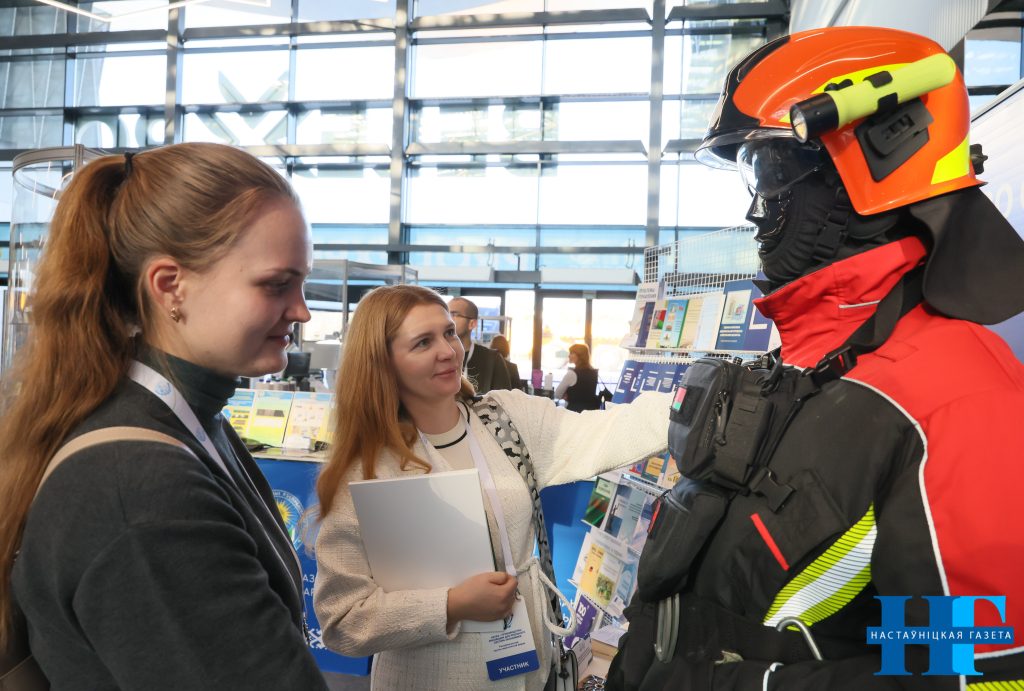
The first national scientific and practical forum, "Science for Industry: Innovations for the Real Economy," was held in Minsk. It brought together more than 350 leading scientists representing the university, academic, and industrial research sectors.
"The forum serves as an excellent platform for discussing pressing issues and identifying innovative solutions capable of improving production processes and enhancing the operational efficiency of enterprises and organizations across our country. In this context, it is particularly important to recall the significance the Head of State places on the development of science and innovation. He has repeatedly emphasized that science is the foundation of statehood and that the achievements of scientists are a powerful engine of national development. The successes of researchers are not merely discoveries for their own sake; they represent a practical contribution to the economy, the assurance of national security, and the improvement of the people's well-being," noted Minister of Education Andrei Ivanets during the plenary session.
He reported that, within the Ministry of Education’s structure alone—including research institutes affiliated with universities—there are 34 accredited scientific organizations and 33 specialized industrial laboratories. Furthermore, 26 joint research laboratories have been established at universities in partnership with enterprises from the real economy, and 29 student design bureaus are currently in operation.
"The successful work of university-based scientists makes a substantial contribution to the nation’s scientific achievements and is directed toward the development of the economy—including industry, agriculture, the energy sector, and other fields. Major domestic scientific research schools have been established and are now operating productively," added Andrei Ivanets. According to him, some of the most notable research projects in 2026 include: a six-axis collaborative robotic arm—developed by scientists at BrSTU—featuring unique load-bearing capacity, machine vision, and an intelligent control system; an enclosed grapple for handling, sorting, loading, or unloading scrap metal (created at the P.O. Sukhoi GSTU); a multi-purpose material for use in space, which served as the basis for a matrix detector for a spectrometer installed on the Russian nanosatellite "Scorpion" (developed at BSU); and a system for personalized therapy for respiratory failure (developed at BSUIR), among others.
Belarus has established a comprehensive environment for the development of academic, university, and industry-based research; by collaborating with the real economy, these sectors have the potential to significantly enrich the nation.
For instance, within the framework of the section on "Innovative Technologies in the Agro-Industrial Complex and Food Industry," university researchers addressed issues directly linked to the country's national security—specifically, the development of veterinary medicines. Belarus has already produced its own veterinary solutions, now in industrial use for livestock, which not only increase milk yields but also improve other key performance indicators.
A second major focus was the application of artificial intelligence in the agro-industrial sector. Autonomous machinery has already been developed for field treatment with fertilizers and chemicals: using machine vision, these systems analyze plants and soil, automatically determine the necessary chemical inputs, plot their own paths, and apply treatments only to the specific areas that require attention.
Discussions also covered challenges related to the production of food products (such as dairy and baked goods) and mineral fertilizers. Furthermore, the importance of engaging students in research activities at an early stage of their education was also addressed. The Council of Young Scientists of the Ministry of Education organized a dedicated session titled "Science: New Horizons for Youth," which brought together students from the National Children’s Technopark, as well as university students and postgraduates.
"We aimed to show young people—especially gifted schoolchildren from the Children’s Technopark—the real opportunities and prospects that arise when science is integrated with industrial production. We also highlighted the importance of protecting trademarks and intellectual property for those planning to develop manufacturing ventures," noted Alexey Roginsky, Chairman of the Council.
The session covered topics such as the development of a Belarusian electric vehicle, the application of artificial intelligence in medicine, and the modernization of agriculture—including advanced field-plowing techniques, drip irrigation, and the use of autonomous tractors.
"It is precisely at events like these that people find like-minded individuals who are eager to explore new frontiers," emphasized A. Roginsky. "We hope that this forum will continue next year."