 Search
MINISTRY OF EDUCATION
OF THE REPUBLIC OF BELARUS

Education for the future of the country
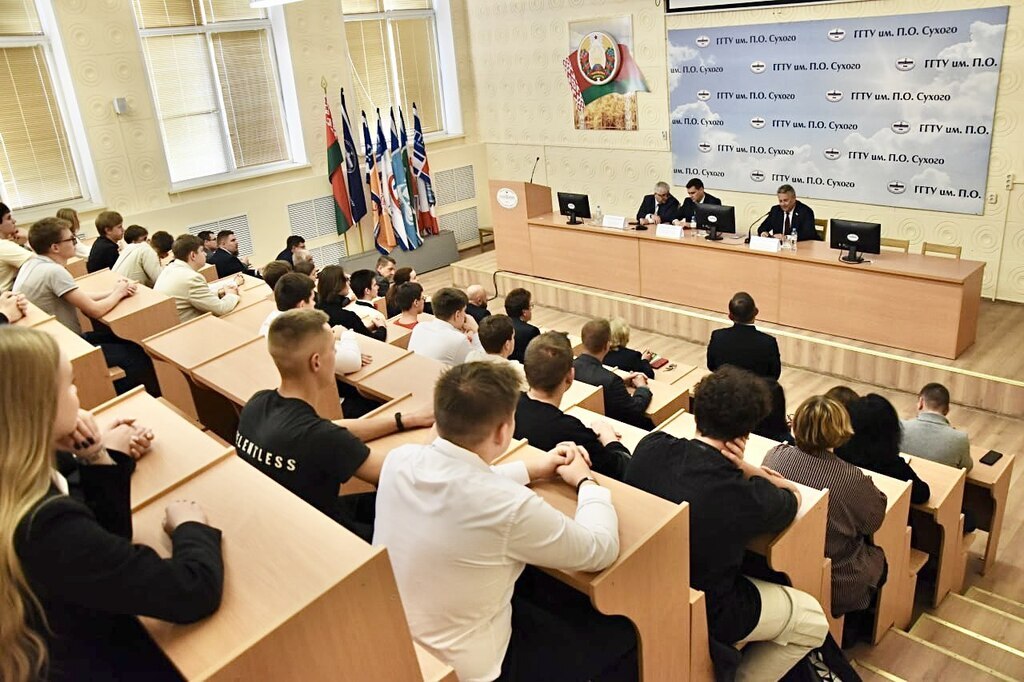
Minsk, 8 October. Yesterday, a meeting was held at the Sukhoi State Technic University of Gomel to discuss the prospects for developing engineering education and strengthening the ties between the training system and the real economy. In attendance were Belarusian Education Minister Andrei Ivanets, First Deputy Minister of Industry Andrei Konyushko, university rectors, representatives of industrial enterprises, and the teaching community.
As Andrei Ivanets noted, training engineering personnel is a key component of the country's technological security. Currently, more than 6,500 10th- and 11th-grade students study in specialized engineering classes, each of whom is assigned to a technical university either in Minsk or in the region. The first graduating class demonstrated impressive results: 77% of graduates entered specialized engineering programs, the highest rate among all specialized programs.
"This data confirms the effectiveness of a systematic approach to career guidance and the training of future specialists." "We begin working with students in school and continue right up until they find employment," emphasized Andrei Ivanets.
Particular attention at the meeting was given to practice-oriented training, which is being developed in three main areas:
1. Establishing competency centers – these have already been opened at seven regional universities with the support of industrial enterprises, including Minsk Tractor Plant.
2. Establishing training workshops at production facilities – a directive from the President of Belarus, currently being implemented at 55 enterprises across the country.
3. Involving practitioners in teaching – work is underway with the Ministry of Labor and Social Protection to formalize the participation of engineers and designers in the educational process.
Companies are also actively involved in training. For example, the Gomel Foundry and Standards Plant has a "Mentoring Regulation" in force, when experienced specialists teach undergraduate and college students directly at the production floors. Young people spend half the day studying at desks and the other half they work under the guidance of a mentor.
"One in four applicants this year chose engineering. This shows the growing prestige of the profession and trust in the training system," the Minister added.
Meeting participants agreed as follows: only close cooperation between education and industry will enable the development of highly qualified engineers capable of ensuring technological sovereignty and sustainable economic development in Belarus.