Training personnel jointly with manufacture. Republican seminar on training engineering personnel at Brest State Technic University
Brest, 14 November. Brest State Technic University held a republican seminar: “On implementation of Belarusian government orders to enhance training of engineering personnel, implementation of the program to open competence centers and other issues”.
Deputy Prime-minister of Belarus Natalia Petkevich noted the necessity to form modern competences of teaching staff who work with engineers as well as content updating for engineering education in accordance with the development of the key economy sectors. During the seminar, special attention was given to effective use of personnel employed by enterprises and expansion of the role of educational establishment’s affiliate departments at production processes as important link in training of in-demand specialists.
In attendance were representatives of Education Ministry, Ministry of Industry, Ministry of Power, Bellesbumprom group, heads of the leading technic universities of the country, top-managers of the main enterprises of the real sector of the economy – JSC “MAZ, JSC “IINTEGRAL”, JSC “BELAZ” LLC “Zubr Energy”, UE “Brestoblgaz” and deputy chairman of Brest regional executive committee Victor Rafalovich.
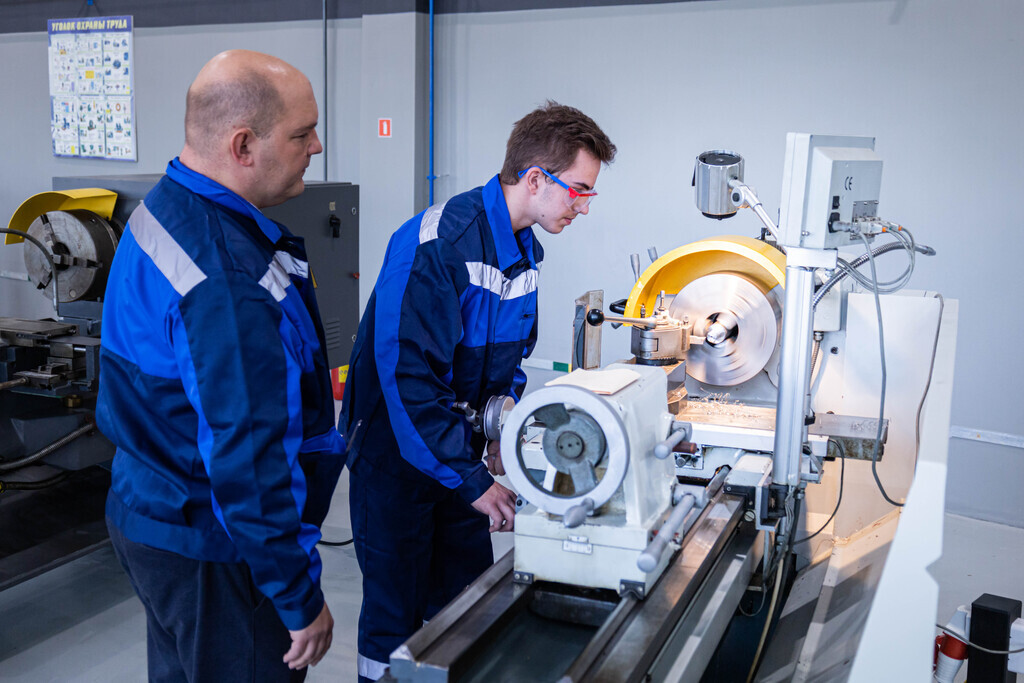
Prior to the seminar, participants visited BRSTU competence center. The program had introduction to the modern laboratories: "Digital Engine Engineering," "Industrial Robotics," "Digital Gas Supply Systems," and "Ventilation and Air Conditioning."
The center has become a development platform for implementing the "school-university-enterprise" principle: here, students participate in real-world projects, engineering students gain practical experience through interactive quests and quizzes, and production facilities identify personnel needs during the specialist training phase.
Education Minister Andriy Ivanets presented a report on the implementation of the Concept for the Development of Engineering Education until 2035, approved in May 2025, and the fulfillment of government instructions.
Key Achievements:
– Seven new educational standards have been implemented and six promising specializations have been launched, including unmanned aerial systems, ultra-high-frequency systems, and road construction equipment;
– The material and technical infrastructure of competence centers at BNTU, BSUIR, PSU named after Euphrosyne of Polotsk, and BrSTU has been modernized through co-financing from enterprises;
– A dual training network has been expanded: pilot programs are being implemented, including between PSU and JSC Naftan;
– Training workshops for practical training of students have been established at over 50 organizations;
– In 2025, 2,400 people graduated from engineering classes, 70.7% of whom entered engineering programs.
The seminar participants emphasized the need to strengthen interaction between universities and enterprises, deepen a practice-oriented approach, incorporate vocational skills into educational programs, and expand the role of engineering spaces in the career guidance of schoolchildren. Particular attention should be paid to training specialists for mining equipment and the digital transformation of industry.
Following the seminar, participants unanimously confirmed that the quality of engineering education directly depends on its integration with the real sector of the economy.
The following decisions were made:
– Accelerate the creation of at least two new competence centers by 2026;
– Continue jointly equipping existing centers with the participation of enterprises;
– Expand the practice of dual training and preliminary employment of senior students in their specialty;
– Engage leading practitioners in teaching while maintaining their salaries at their primary place of work;
– Develop student and youth design bureaus;
– Strengthen career guidance: support the "Engineer of the Future" projects, engineering classes, and the National Children's Technopark.
The national seminar at BrSTU marked an important stage in the implementation of the national strategy for training highly qualified engineering personnel – the foundation of Belarus's technological sovereignty and sustainable industrial growth.