This pattern is an ancient hymn to bread. On ancient historical roots and sacred meanings of our state symbols
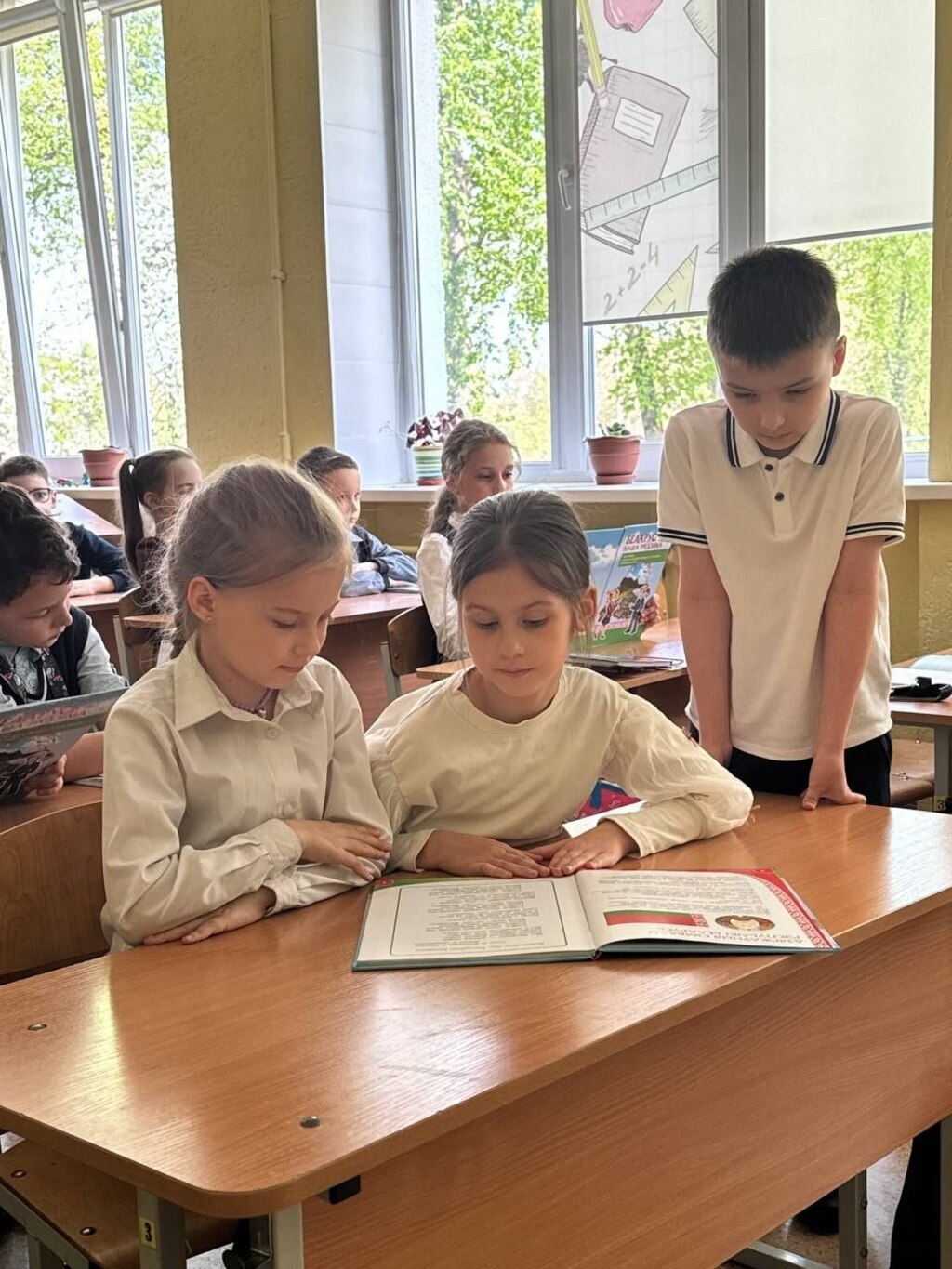
On May 10th, the entire country will celebrate the Day of the National Flag, National Emblem, and National Anthem. These symbols are the DNA of our nation, encoded with both peaceful labor and a heroic past. Today, we are demonstrating that respect for the emblem, flag, and anthem should become a natural part of our personal culture.
From a Peasant Thread
Olga Borovskaya, Head of the Department of General History and International Relations at the Institute of History of the National Academy of Sciences of Belarus, PhD in History, and Associate Professor, spoke about the deep historical roots and sacred meanings of our flag.
"The modern flag of Belarus is based on a strong historical tradition. Its unique feature is the use of a national ornament, based on a pattern woven in 1917 by Matryona Markevich, a simple peasant woman from the village of Kostelishche, Senno District. This ornament's journey to greater statehood began with discoveries in the National Archives of the Republic of Belarus. Researchers discovered it in the collections of the Council of Industrial Cooperatives of the BSSR." The choice of this particular pattern was no accident: experts confirm that this design is classic throughout the country.
In 1995, by popular vote, expressed in a national referendum, the country received a new national flag. The 1951 design was used as a basis, but with important adjustments: Soviet symbols were removed, and the national pattern was given its historically accurate embodiment—a red pattern on a clean white canvas.
Each element of the national flag, according to the expert, is imbued with profound meaning. For example, red embodies strength, courage, and honor. It commemorates the blood shed by the people during the Great Patriotic War and the triumph of victory over fascism. Green is a symbol of rebirth and natural harmony. The color of our fields and forests, it embodies hope, creative labor, and the energy of youth.
- White and its ornament represent spiritual purity and wisdom. The flag's patteritself is an ancient hymn to bread, bountiful harvests, and procreation. It glorifies hard work and valor, the specialist explains.
Precision of Detail
The national emblem, along with the flag, is an integral attribute of sovereign Belarus. Its current appearance is also the result of the people's choice in the 1995 referendum, and a new stage in the symbol's history was the law of January 4, 2021, adopted at the initiative of the Head of State and the Heraldic Council. This document codified the standard images of the emblem, making them more modern and artistically refined.
"A careful observer will notice important changes," Olga Nikolaevna continues. "At the top of the emblem, the five-pointed star has been flattened, symbolizing confidence and tranquility. The outline of the Republic of Belarus is now outlined by a gold line—the color of purity and nobility." The terrestrial sphere has also been transformed: the contours of the continents have become geographically precise, and their color has changed to a natural brown. Particular attention was paid to details such as parallels and meridians, and the inscription "Republic of Belarus" has become more distinct and expressive.
The interviewee notes that each element of the coat of arms reflects the national character and wealth of the Belarusian land.
"The wreath of ears of grain, flax, and clover is a tribute to agricultural labor, which has historically been the foundation of the economy and prosperity. Wheat and grains represent the fertility of our soils and the bounty of nature. The rising sun and star symbolize the country's independence and the belief that Belarus will always have a peaceful and clear sky," explains Olga Borovskaya. "The unity of the palette—the color scheme of the coat of arms is inextricably linked with the state flag."
Melody of Generations
After gaining independence, for a long time, until 2002, our country had no officially approved lyrics or notes for a national anthem. A special commission was created in early 2002, and on May 8, five final versions were performed in the Great Hall of the Palace of the Republic in the presence of the Head of State. The competition proved worthy: the commission considered such iconic works as "Radzima May Daragaya" (V. Olovnikov and A. Bachilo) and "Krasyi, Belarus!" (V. Rainchik and L. Pronchak). However, tradition prevailed in the final: three versions of lyrics set to music by N. Sokolovsky, developed by poets V. Karizna, D. Morozov, and I. Korendo.
The press published the lyrics of all contenders, and a special hotline was set up to collect opinions. Thousands of calls and letters from all corners of the country confirmed that Belarusians were voting for continuity. Ultimately, the updated text by Vladimir Karizna and Mikhas Klimkovich emerged as the winner. On July 2, 2002, the President officially approved the text and notes by decree, turning Sokolovsky's music into a symbol of independent Belarus.
A Voice in History
Marina Yurkina, the voice heard in that iconic recording that every Belarusian hears during special occasions and in the first minutes of the New Year, spoke about the creation of the country's most important musical work.
The Creative Life of Marina Alekseevna is inextricably linked with the Belarusian Television and Radio Company Academic Choir, and 2002 proved to be a special year for the group:
"Our director, the legendary Viktor Rovdo, announced that we would record all five proposed versions. Rehearsals and recording took place in the Big Studio of the House of Radio together with the Role Model Orchestra of the Armed Forces under the direction of Alexander Fedorov."
The competition culminated in a performance in the Big Hall of the Palace of the Republic. Present were Belarusian President Alexander Lukashenko, renowned composers, and representatives of the Ministry of Culture.
"There was excitement," Marina Alekseyevna recalls. "We understood: history was being made at that moment." After all the versions were performed, an event occurred that the artists will remember forever. The President didn't simply listen to the recordings with the committee. He approached our choir and sincerely asked the artists themselves, 'Which version do you like best?'"
It was a lively dialogue; the Head of State wanted to hear the opinions of everyone who, with their talent, brought this music to life.