Starting March 1st, kindergartens across Belarus will be offering groups for children under two years old
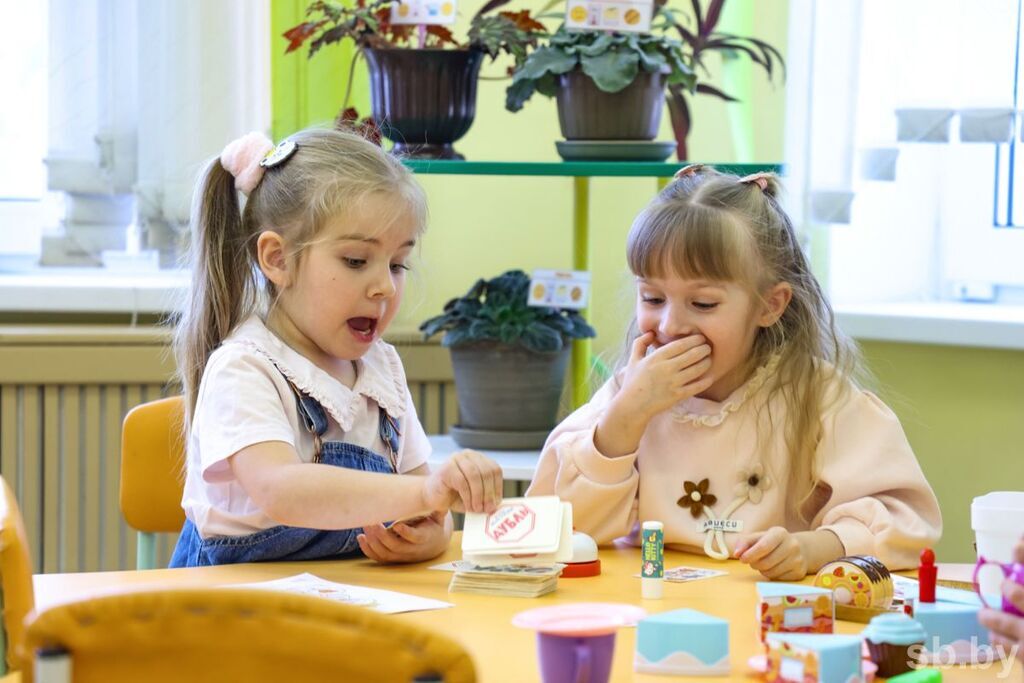
Preschool education is highly accessible in Belarus. In 2025, 90.1 percent of children aged 1 to 6 years use educational services. However, this figure will soar soon. Starting March 1, groups for children under two years old will be operating in every district of the country, Albina Davidovich, Deputy Head of the Main Directorate for General Secondary and Preschool Education and Head of the Preschool Education Department at the Ministry of Education of Belarus, told sb.by.
Currently, the preschool education system is focused primarily on providing places in preschool institutions for children aged 2 and older, as maternity leave is provided until the child's age of 3, explains Albina Davidovich:
This maximizes the need for preschool institutions when mothers return to work. Furthermore, it is taken into account that preschool education is not compulsory and families have the opportunity to raise their children independently until they reach 5 years and then, kids must go through preparatory courses either through preschool programs or through supplementary education programs for children.
The expert explained that the law allows for the placement of children under 2 years of age in kindergartens by establishing early childhood groups (up to one-year-old), second early childhood groups (from one to two years old), and mixed-age groups (from one to seven years old).
If necessary, such groups are created or places in mixed-age groups are provided in accordance with the stated need. Currently, 318 educational institutions operate 335 groups for children under 2 years old, Albina Davidovich explained:
However, family needs are changing with more and more parents, especially mothers, plan to return to work earlier. This will create a sustainable demand for places for young children in the near future. We believe that a phased approach aimed at increasing the number of groups for children under 2 years old, based on an analysis of actual needs and regional specifics, will enable a balanced development of the network, avoiding disparities and ensuring social equity in access to preschool education services. Corresponding organizational work is already underway in the regions at our direction. The creation and development of a network of groups for children under two years of age is not only a response to family needs but also an important step in supporting women's employment, strengthening the institution of the family, and increasing access to high-quality preschool education from the earliest years of a child's life.
FOR REFERENCE
There are 335 groups for children under 2 years of age operating in 318 educational institutions:
Brest Oblast — 6 groups in 6 preschools for 105 students (Baranovichi, Moskovsky District of Brest, Pinsk);
Vitebsk Oblast — 65 groups in 58 preschools for 707 students (Beshenkovichi, Verkhnedvinsky, Lepel, Liozno, Miory, Orsha, Polotsk, Tolochin, Chashniki, Shumilino regions, Novopolotsk, Vitebsk);
Gomel Oblast — 47 groups in 46 preschools for 528 students (Zhitkovichi, Zhlobin, Mozyr, Petrikovsky, Rogachevsky, Rechitsa, Svetlogorsk regions, Gomel);
Grodno Oblast — 31 groups in 30 preschools for 319 students (Volkovysk, Lida, Novogrudok regions, Grodno);
Minsk Oblast — 15 groups in 15 preschools for 163 students (Borisov, Dzerzhinsky, Slutsk, Soligorsk regions, Zhodino);
Mogilev Oblast — 60 groups in 58 preschools for 733 students (Mogilev, Babruisk town, Babruisk region, Kirovsky, and Osipovichsky regions);
Minsk — 111 groups in 105 preschools for 1,028 students (Zavodsky, Leninsky, Moskovsky, Oktyabrsky, Pervomaysky, Partizansky, Sovetsky, and Frunzensky districts).