How education can change media strategy: the results of a national seminar
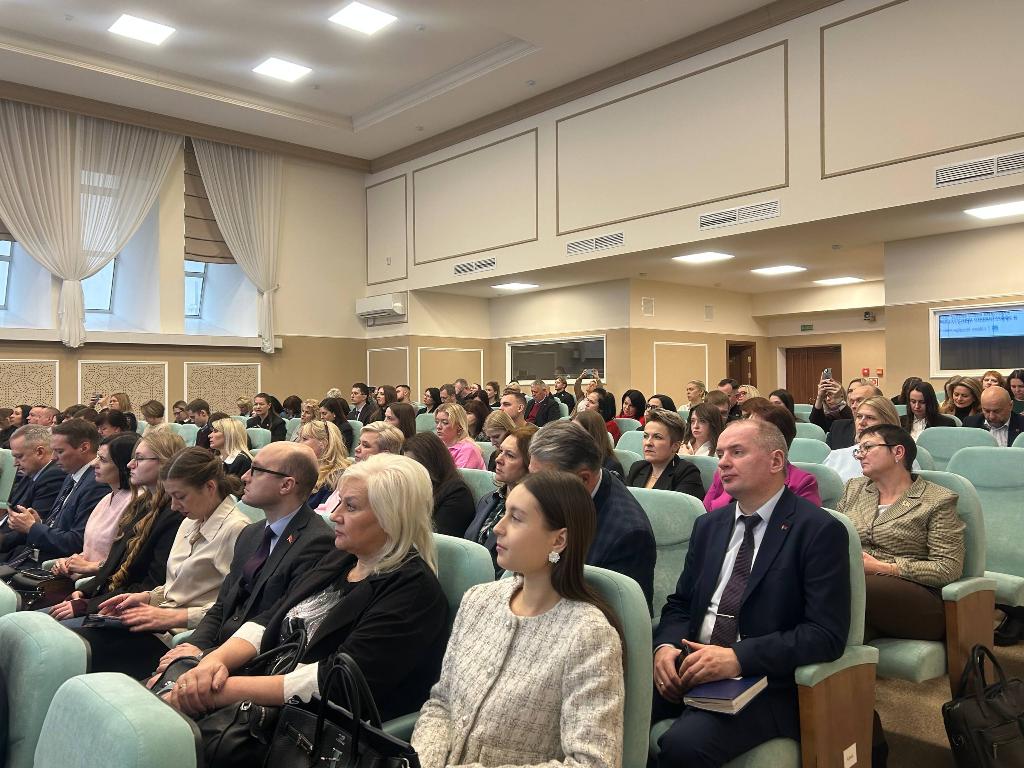
Today, the Ministry of Education hosted a national seminar and workshop for media teams and public relations specialists. The event was attended by Deputy Minister of Education Ekaterina Petrutskaya, heads and staff of press offices from higher education institutions and regional education authorities, as well as representatives from specialized media outlets.
Following the discussions, three key areas for engagement with the media and the public were identified:
1. Responsiveness and proactivity. The response time to misinformation circulating on social media and messaging apps must take hours, not days. A well-reasoned rebuttal must be provided immediately—on the very same platform where the false information appeared.
2. Meaningful content and new formats. Shifting the focus from formal events to people and success stories. Adopting vertical videos, podcasts, and conversational formats, while strictly adhering to internal fact-checking standards. The promotion of state ideology should be organic and rooted in tangible, constructive achievements.
3. Channel diversification and the development of an expert pool. Building a roster of compelling internal spokespersons capable of explaining complex topics in an accessible way, while also actively engaging opinion leaders, media volunteers, and student activists.
The seminar also presented the results of a recent survey of leading media representatives. The Belarusian State University (BSU), the Maxim Tank Belarusian State Pedagogical University (BSPU), the Belarusian State University of Informatics and Radioelectronics (BSUIR), and the Belarusian National Technical University (BNTU) were highly commended for their responsiveness and systematic approach. Regional educational institutions—including the Yanka Kupala State University of Grodno, the Francisk Skorina Gomel State University, the Pavel Sukhoi State Technical University of Gomel, the Alexander Pushkin Brest State University, and the Belarusian State Agricultural Academy—also demonstrated excellent performance. Special thanks were extended to the Education Committee of the Minsk City Executive Committee.
Participants were also reminded that the head of an educational institution bears personal responsibility for the state of its information environment. Particular attention was given to the use of neural networks: texts and images generated by artificial intelligence require rigorous editorial oversight, as they often elicit a negative reaction from the audience due to their unnatural quality.
The practice-oriented segment of the seminar featured presentations by subject-matter experts, who shared modern communication tools and analyzed relevant case studies together with the participants.