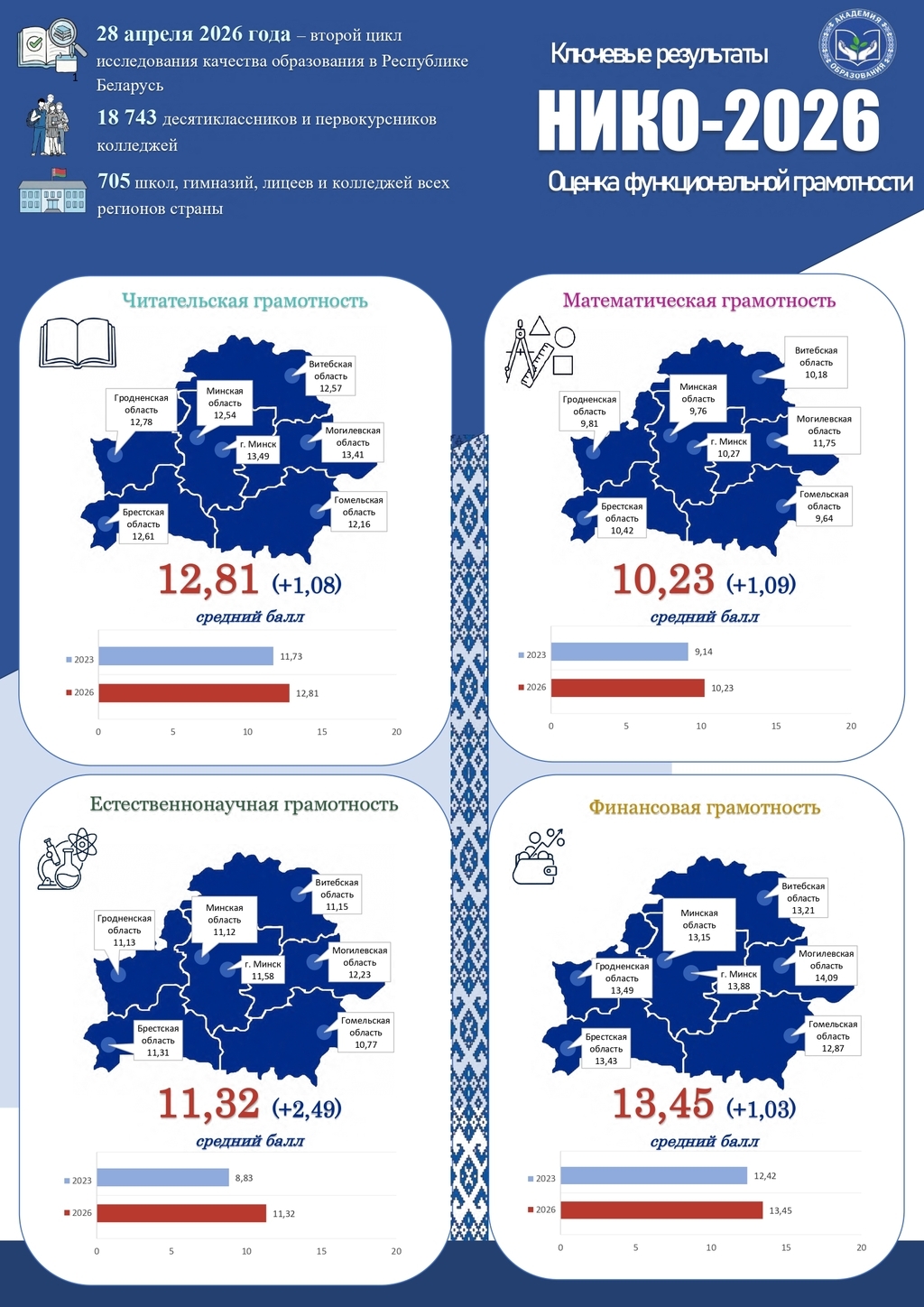
Highest average score in financial literacy. What are the results of the NIKO-2026?
In the second cycle of the National Survey of Education Quality (NIKO), Belarusian schoolchildren demonstrated an increase in their functional literacy.
The second cycle took place in April. This large-scale educational project for Belarus was launched in November 2023. The main objective of NIKO is to determine the level of functional literacy (reading, mathematics, science, and financial literacy) among the younger generation. It also focuses on sociocultural factors that may influence young people's functional literacy.
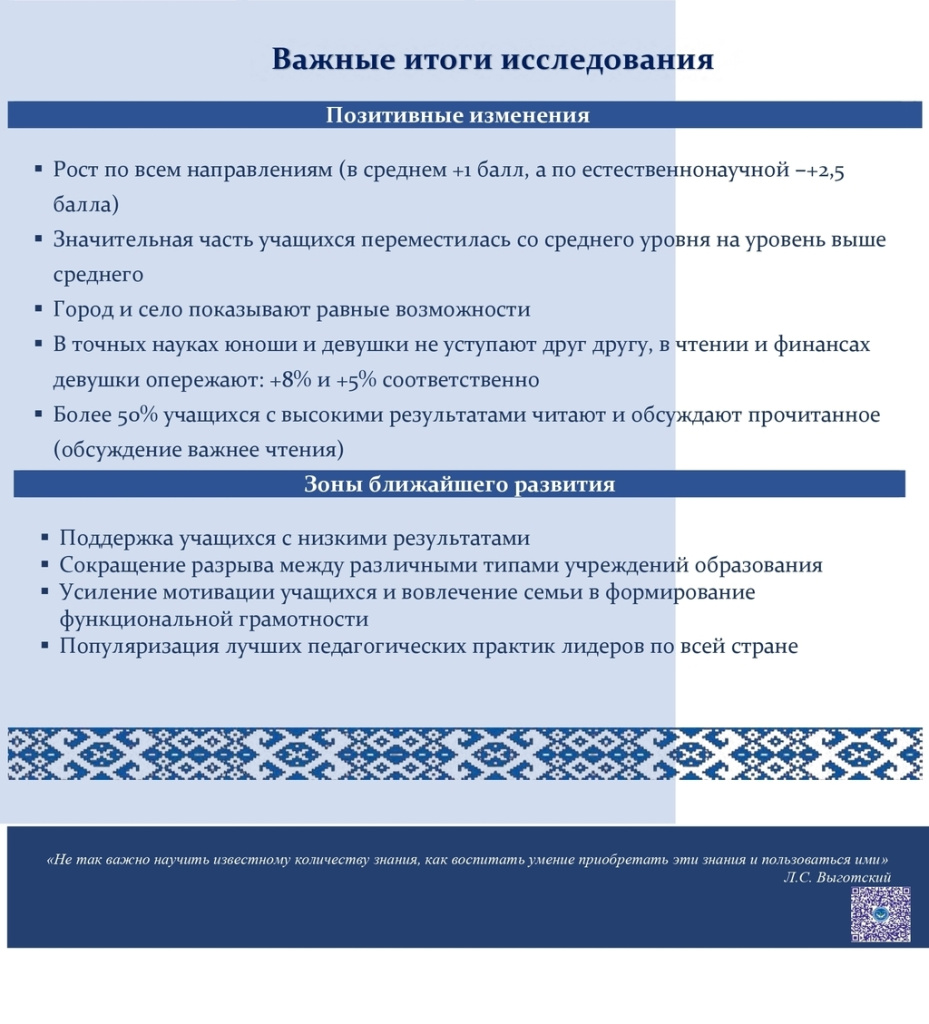
The study recorded a steady increase in reading, mathematics, science, and financial literacy compared to 2023. This indicates an increase in average scores and a significant shift from average to above-average scores. The most notable improvement is in science literacy, where the proportion of students with high scores increased by 22%. Students demonstrated the highest scores in financial literacy. The proportion of students who scored 18 to 20 points out of 20 in reading literacy increased almost fourfold (from 2.8% to 10.7%).
NIKO-2026 confirmed the uniqueness of the Belarusian education system, which provides everyone with equal opportunities to receive a quality education. No statistically significant differences were found between the results of students in urban and rural educational institutions. In terms of science literacy, students in rural educational institutions slightly outperformed their urban counterparts.
The survey revealed a direct correlation between results and the environment in which a child grows up. Cultivating a culture of reading and discussion in the family significantly increases the chances of achieving high results. The teacher's teaching style is also important for success. Students whose teachers explained the material until everyone fully understood it performed best on functional literacy assignments. Students who demonstrated maximum willpower demonstrated results ten times higher than those who approached the test formally. The main area of growth is targeted support for students with low performance.
The results of the NIKO will serve as the basis for adjusting curricula, improving teaching materials, and developing new methods for teacher professional development.
Approximately 20,000 students from more than 700 educational institutions across the country participated in the NIKO-2026. The Academy of Education is currently conducting a multi-component analysis of the NIKO-2026 results and developing recommendations for the national education system.