Educators at the Center for Correctional-Developmental Education and Rehabilitation are learning to use a sensory integration equipment system to support children with ASD
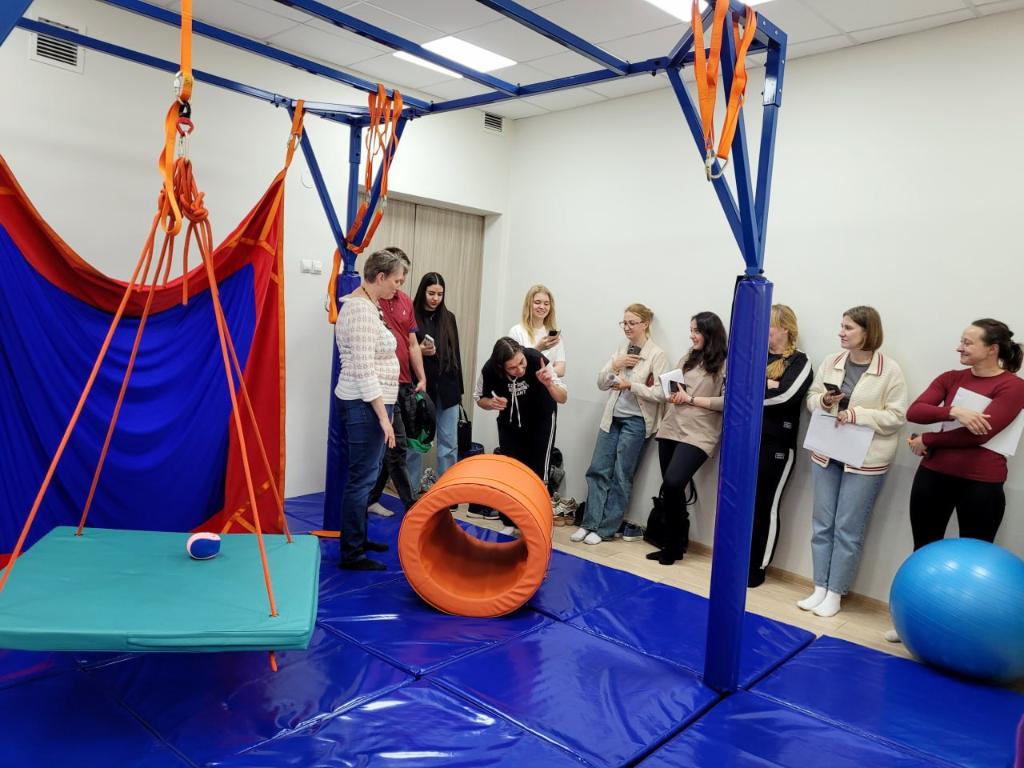
In Belarus, systematic efforts are underway to strengthen the infrastructure of centers for correctional-developmental education and rehabilitation, as well as to enhance the professional qualifications of specialists working with children who have specific psychophysical developmental needs.
As part of this initiative, a series of training seminars has been launched for educational psychologists and special education teachers (defectologists) across the country, focusing on the use of sensory integration systems. This equipment—designed and manufactured in Belarus—is intended for correctional and developmental work with children on the autism spectrum and those with severe, multiple developmental disabilities.
The sensory integration system creates a controlled environment where a child can safely work to overcome emotional withdrawal, address stereotypical behaviors, and develop coordination and social interaction skills. The training places particular emphasis on individualized approaches and techniques for establishing communicative contact with children who have special needs.
Sensory integration refers to the interaction between the body’s various sensory systems, enabling an individual to adapt effectively to and engage with the world around them. Impairments in sensory integration can lead to reduced concentration and diminished nervous system efficiency, which in turn hinders learning and the ability to carry out daily activities.
Sensory-motor integration systems serve as an effective tool both for diagnosing developmental impairments and for conducting correctional and developmental interventions for children across various diagnostic categories.
To build the necessary professional competencies, the Institute of Inclusive Education, the Institute for Advanced Training, and the Republican Center for the Development of Inclusive Education—all part of the Maxim Tank Belarusian State Pedagogical University—are organizing professional development courses for educational psychologists and special education teachers working in centers for correctional-developmental education and rehabilitation.
Such systemic measures—ranging from the procurement of modern equipment to continuous staff training—are part of a state policy aimed at creating an accessible and high-quality educational environment for every child.