81 years since the Khatyn tragedy. People demonstrated the living link between generations at the memorial complex
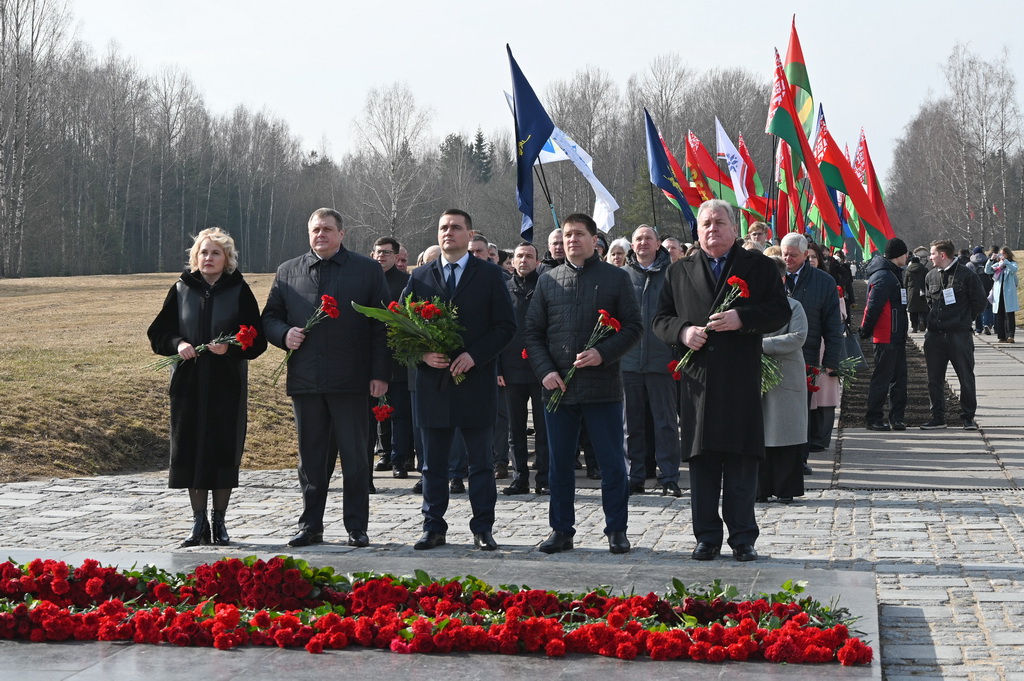
March 22, Belarusians honored the memory of the burned alive civilians of Khatyn. Thousands of people not indifferent to the ongoing pain of the people and the country came to bow their heads in a moment of silence, remember those who were innocently killed by fascist punitive forces and lay flowers at the foot of the memorial.
It was here exactly 81 years ago when Nazi executioners and their accomplices destroyed a Belarusian village, burned it alive and massacred almost everyone who lived here. In Khatyn, 149 civilians were killed, including 75 children under 16 years of age. This is just one of more than 11 thousand affected villages and small settlements that were burned forever. And this figure is not final. Thanks to the joint work of the General Prosecutor's Office of Belarus with all interested parties, more and more facts about the genocide of the Belarusian people are being revealed every month.
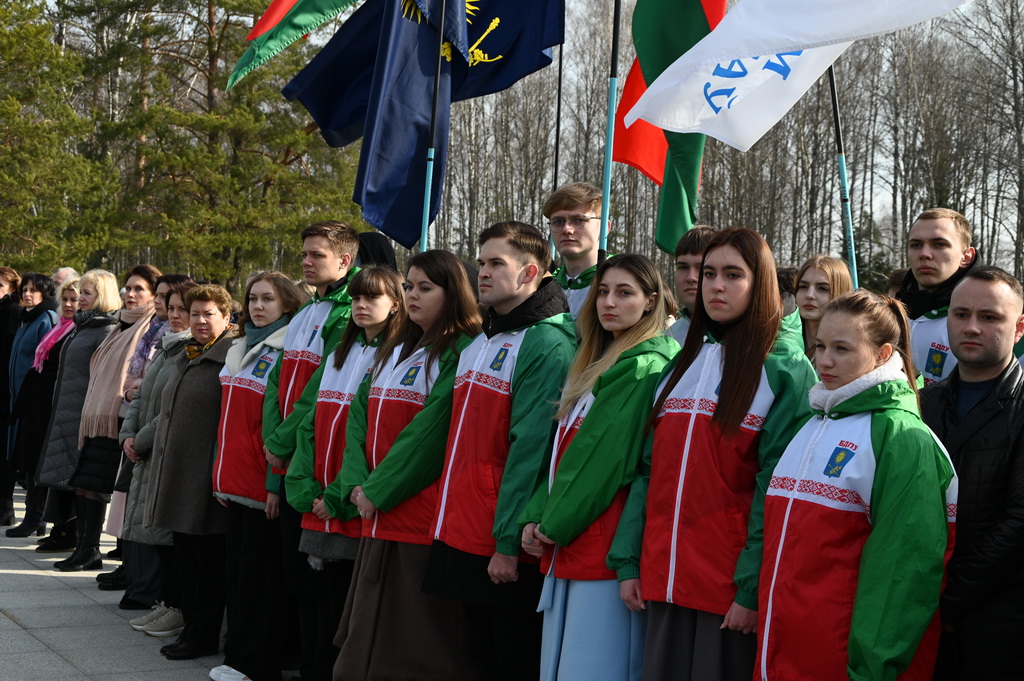
According to tradition, the education sector was one of the most numerous at the requiem meeting in the Khatyn memorial complex. Among those who came to pay tribute to the memory were schoolchildren and students, college students, teachers and lecturers as well as rectors. The strong emotions of this day were shared with colleagues and young people by the Minister of Education of Belarus Andrei Ivanets. The head of the relevant department, in communication with the grandchildren and great-grandchildren of the generation of winners, recalled the need to preserve the memory and truth about the tragic pages of our history and the development of everything that was created with hard work in the post-war period by the Belarusian people.
“Search activity is developing very actively. In 2023, we have increased from 400 to 500 search teams that operate at our educational institutions. This is a joint work with local history museums and centers, the Ministry of Defense, and the relevant military units. It is also very important, because the war ends when the last soldier who died in this war is buried. And, of course, the system of military-patriotic clubs and classes is also a structural element that actually becomes the military-patriotic education that we conduct with our youth,” added Andrei Ivanets.
Young people and teachers with an active civic position not only protect the facts from all kinds of attacks about the monstrous abuse of children, women and the elderly by haters on our land, but also carefully preserve and care for the silent symbols of the hard times of war - monuments and memorials, replenish museum exhibitions, including school ones. Teenagers conduct excursions for peers and guests of the country.
Today, all schools in Belarus also conduct a single lesson dedicated to the anniversary of the tragedy in Khatyn. This tradition is only 2 years old. Its main goal is to deepen students' knowledge about the historical past of the Belarusian people, tragic events, facts of genocide of the Belarusian people during the Great Patriotic War, as well as the formation of a negative attitude towards violence. This lesson did not leave a single student indifferent today. Young Belarusians were offered to watch a documentary chronicle about the burned village, and were also told about the difficult fate of the only surviving adult witness of that terrible massacre. Victoria Shishlo, a student at school No. 52 in Minsk, shared her opinion on this matter: “The younger generation now takes this very seriously. This cannot but rejoice, because we must remember such tragic events and appreciate the experience of our people.”
Natalya Katovich, head of the center for social, educational and ideological work at the Academy of Education, explained: “Conducting uniform lessons in general secondary education institutions dedicated to significant dates in the history of our country has become a good tradition. They help preserve historical memory and educate the younger generation to take responsibility for the future of their homeland. The teacher’s task is not to leave children’s souls indifferent to the events of the past, to convey to every student how cruel and terrible was the war our people won.”
The younger generation should never forget about the price we paid for peace, prosperity and a calm life. And in our country we have already learned this lesson.